
A driveway that lifts the whole house.
Block paving, resin bound, tarmac and natural stone — dug out properly, drained properly and finished neatly. New driveways and patios across Dorset, Hampshire and Wiltshire.
It's what's underneath that matters
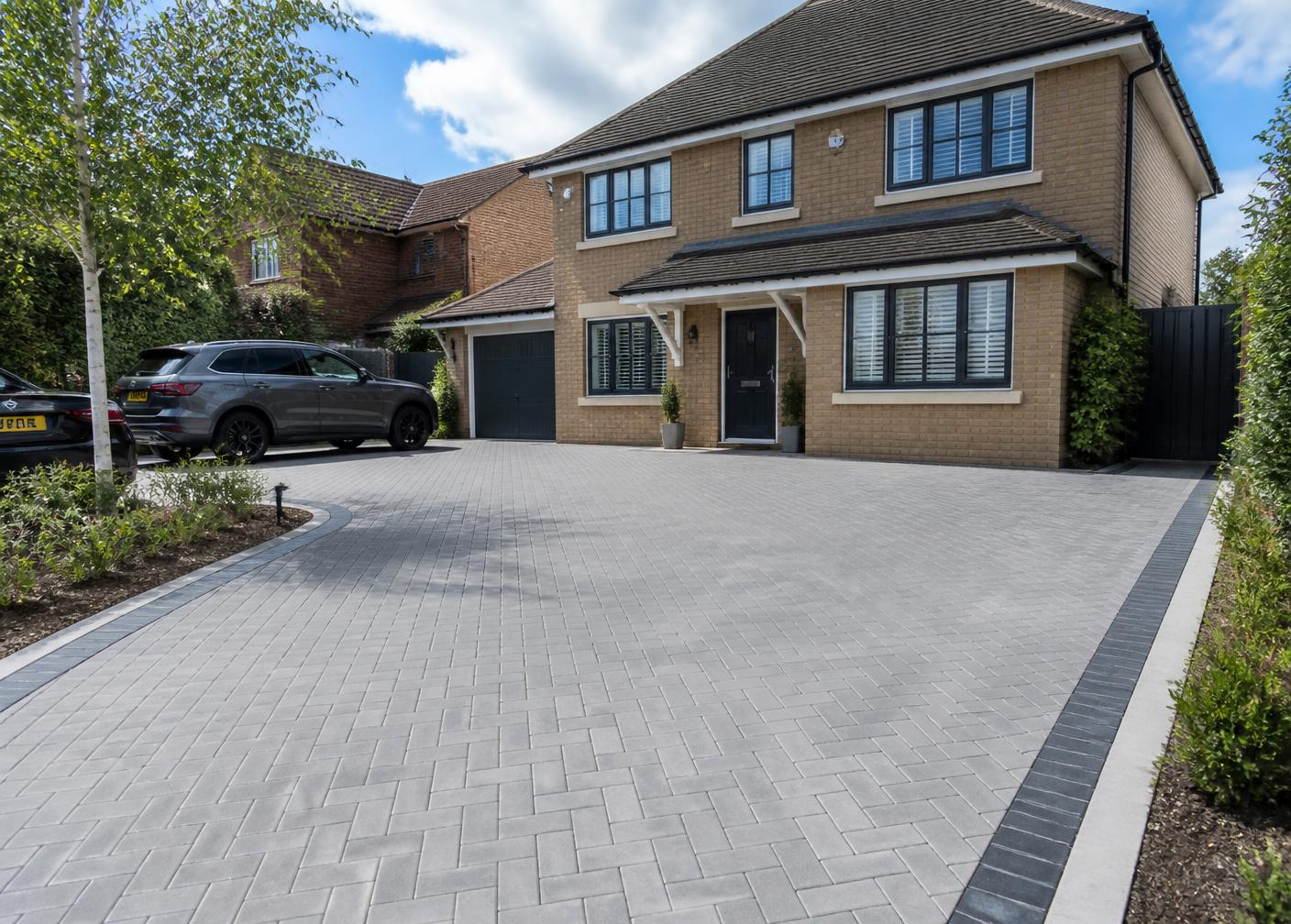
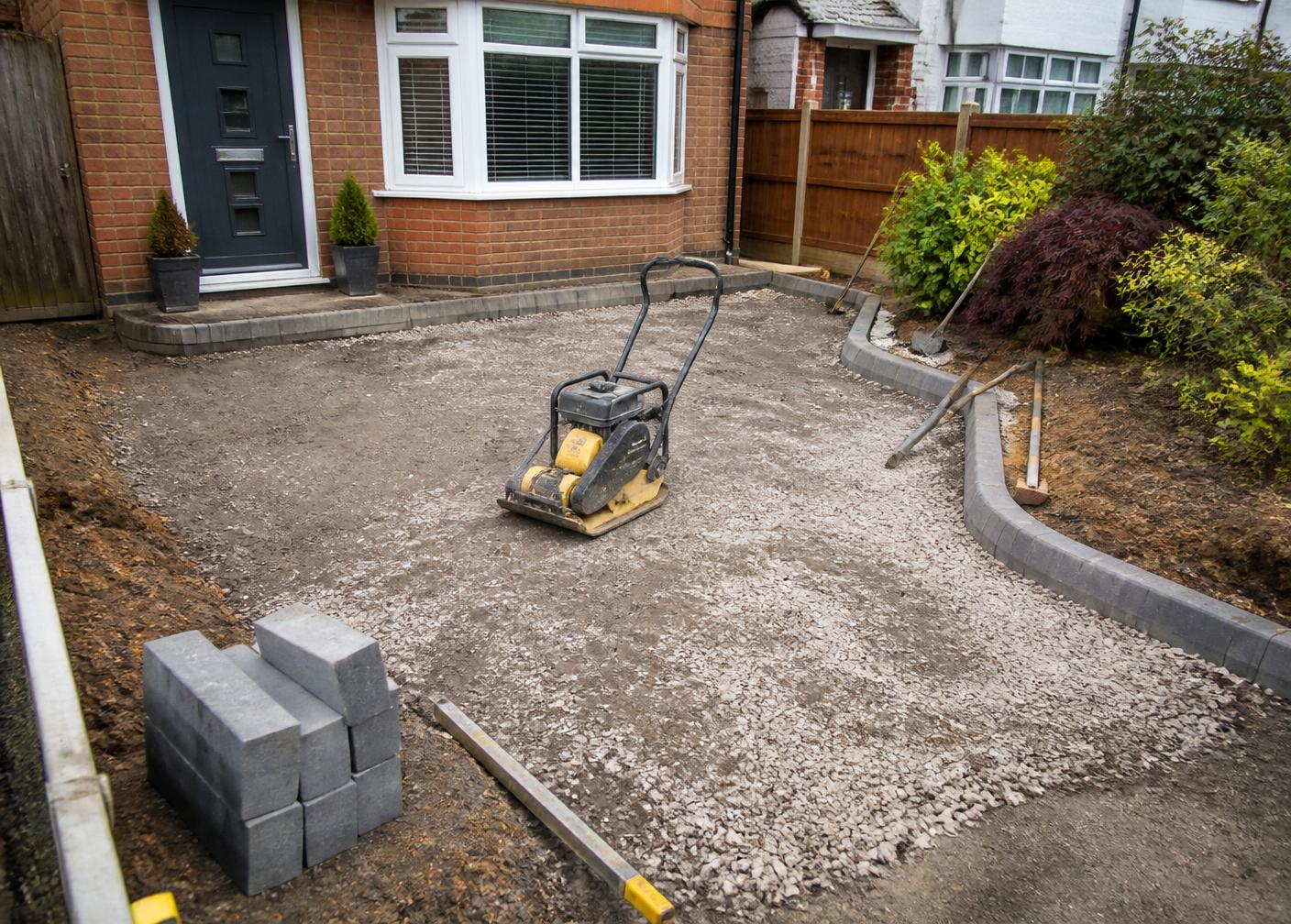
Most failed driveways aren't a surfacing problem — they're a groundwork problem. We excavate to the right depth, remove the spoil, lay and compact a proper MOT Type 1 sub-base, set haunched edgings in concrete and only then lay the surface.
That's why our driveways stay level, drain away and don't sink into ruts where the car sits.
The surfaces we install
Block paving — the most popular choice. Huge range of colours and formats, laid in herringbone or stretcher bond with contrasting borders. Individual blocks can be lifted and relaid if you ever need access to a service.
Permeable block paving — the same look with open joints and a free-draining build-up, so surface water soaks away on site. Usually the easiest route to keeping within planning rules on a front garden.
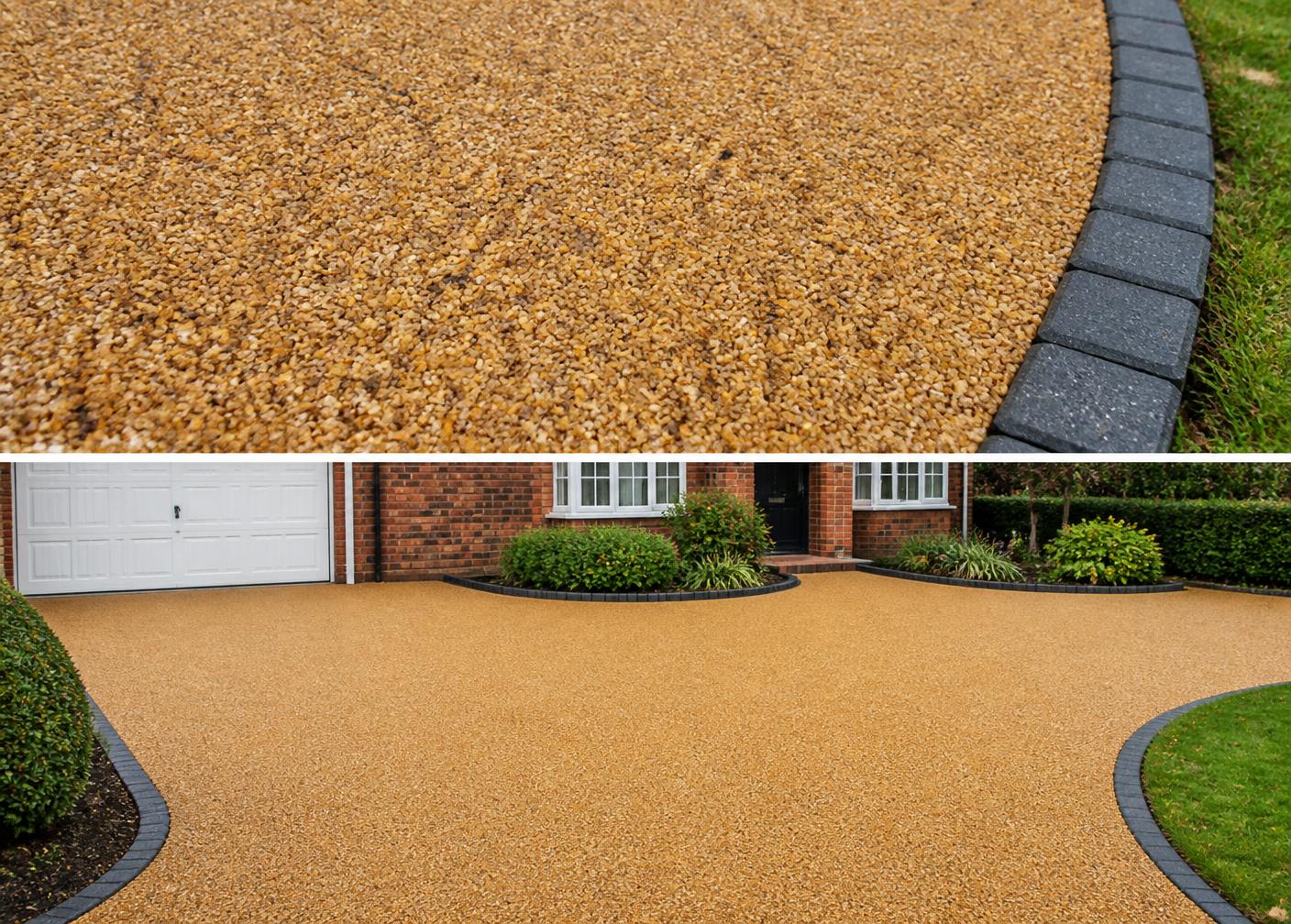
Resin bound gravel — a smooth, seamless, SUDS-compliant finish with no loose stones. Ideal if you want a clean, modern look that's easy to sweep and kind on prams and wheelchairs.
Tarmac — hard-wearing, quick to install and the best value on larger driveways and shared accesses.
Gravel — cost-effective and traditional, laid over a stabilising grid so the stone stays where you put it.
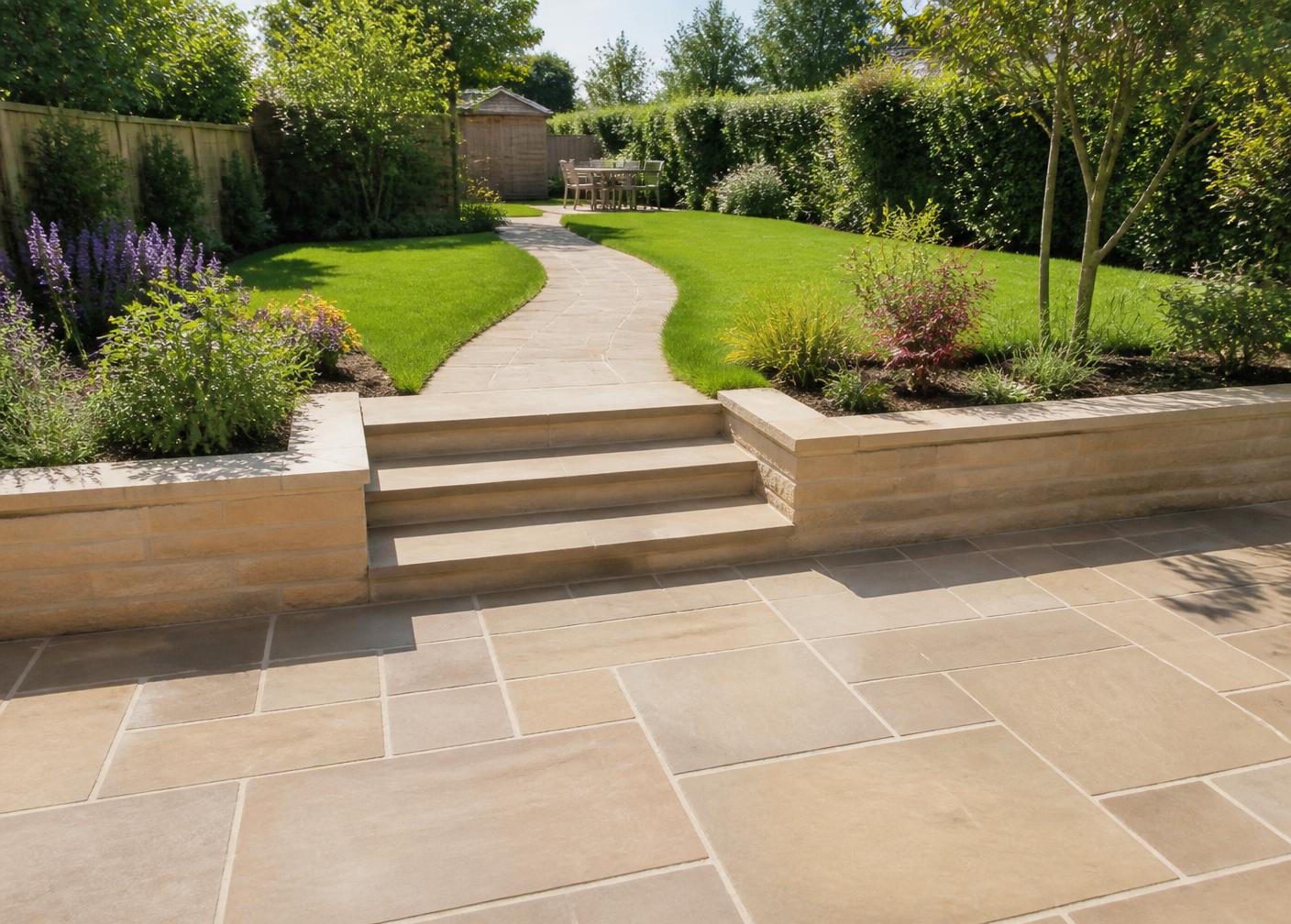
Natural stone & porcelain — Indian sandstone, granite setts and porcelain paving for patios, paths and feature areas.
Patios, paths & steps
We build patios on a full mortar bed with correct falls away from the house, brush-in or slurry pointing, and matching steps, sleeper walls and edging so the whole garden ties together. Ideal alongside an extension project while the site is already open.
Drainage, drop kerbs & planning
Water has to go somewhere. Depending on the site we'll design in linear channel drains, ACO gullies, soakaways or a permeable build-up — never running run-off out onto the pavement.
If you're paving over a front garden with an impermeable surface and no drainage, you may need planning permission. We'll advise on the simplest compliant option, and we can arrange dropped kerb applications with the local council where you need vehicle access.
How the job runs
Typical timescale is 3–7 working days for a standard domestic driveway. Day one is excavation and muck-away, then edgings and sub-base, then surfacing, then kiln-dried sand, jointing and a final clean down. We keep access for your bins and front door as far as possible and leave the site swept.
Recent work
Frequently asked questions
- How long does a new driveway take?
- Most domestic driveways take 3–7 working days depending on size, the surface chosen and how much digging out is needed. Resin bound needs a dry, warm-enough day for the final pour, so we build a little weather contingency into the programme.
- Which driveway surface lasts longest?
- Properly installed block paving and tarmac both give 20+ years with minimal maintenance, and blocks have the advantage that damaged areas can be lifted and relaid. Resin bound typically lasts 15–20 years and stays looking newest for longest. The right choice usually comes down to look, budget and drainage.
- Do I need planning permission for a driveway?
- If you're laying more than five square metres of impermeable surface in your front garden with no way for water to drain within your boundary, you'll usually need permission. Using permeable paving, resin bound or adding a soakaway normally keeps the job within permitted development. We'll flag this at quote stage.
- Can you remove the old driveway and take the waste away?
- Yes. Excavation, breaking out old concrete or tarmac, and full muck-away are included in our quotes, and waste goes to licensed tips. There are no surprise skip charges at the end.